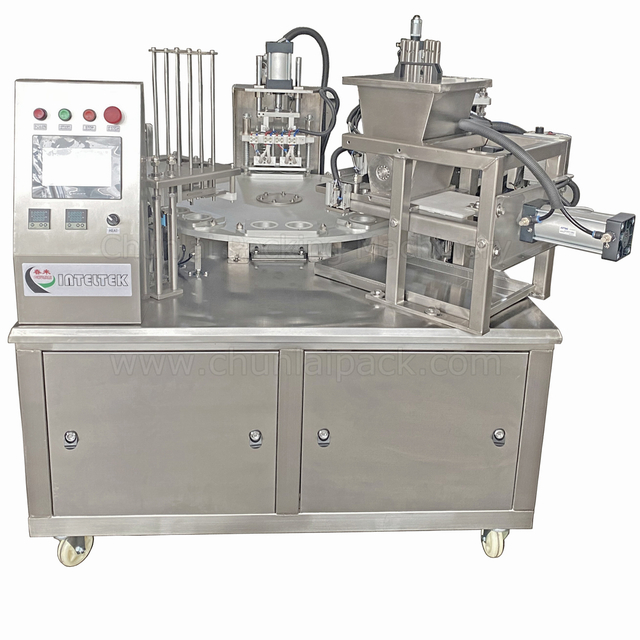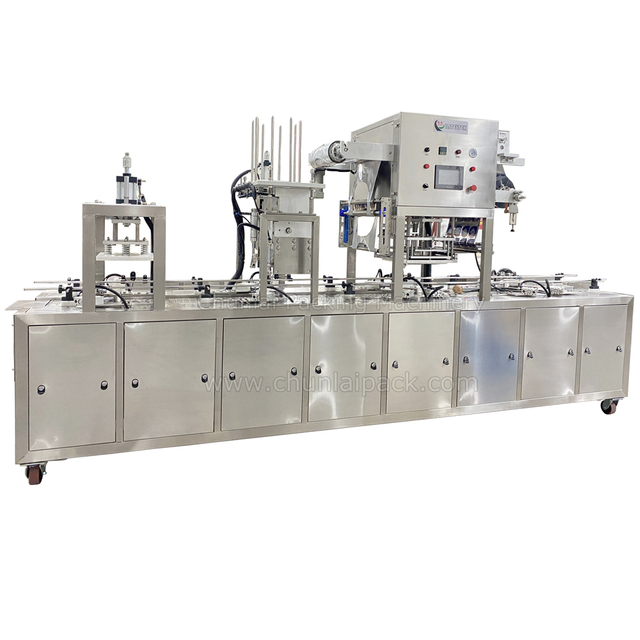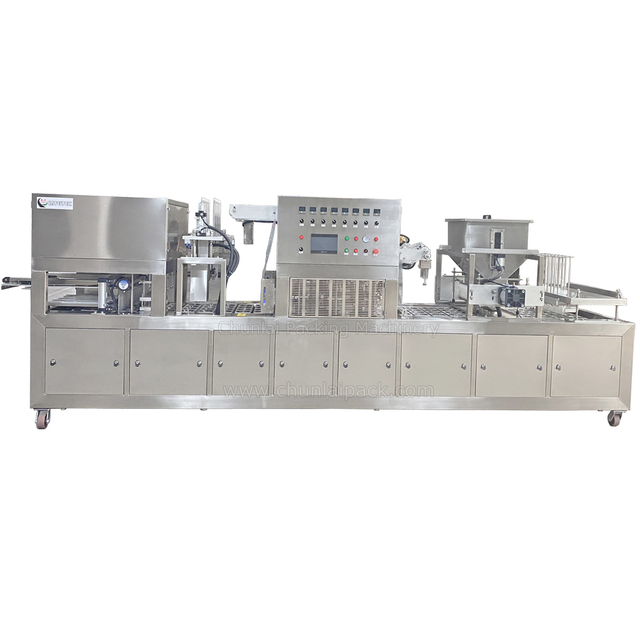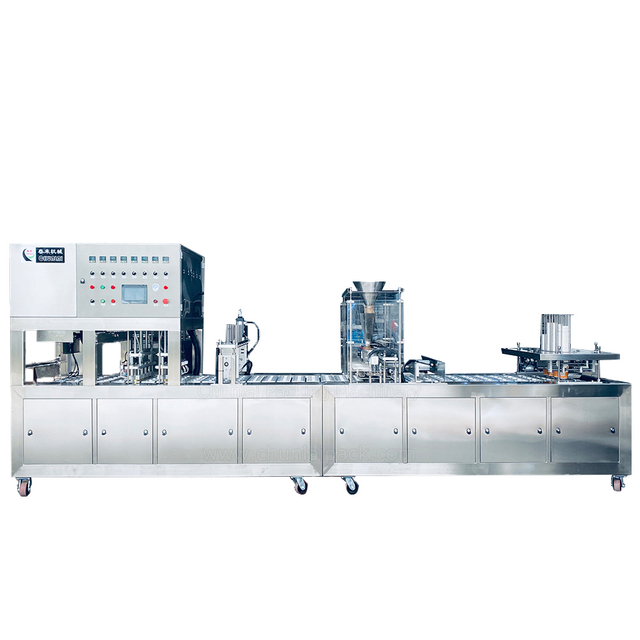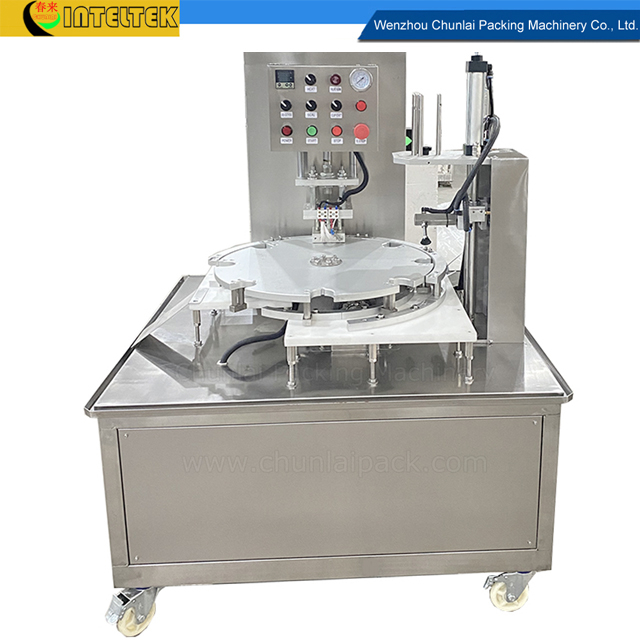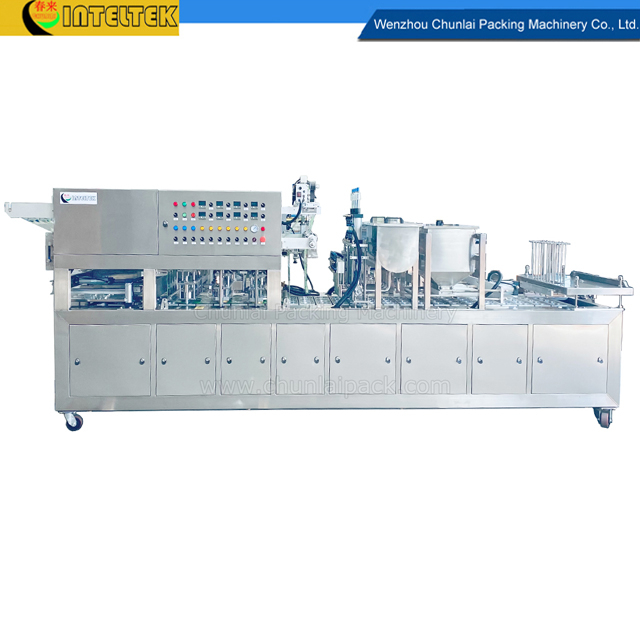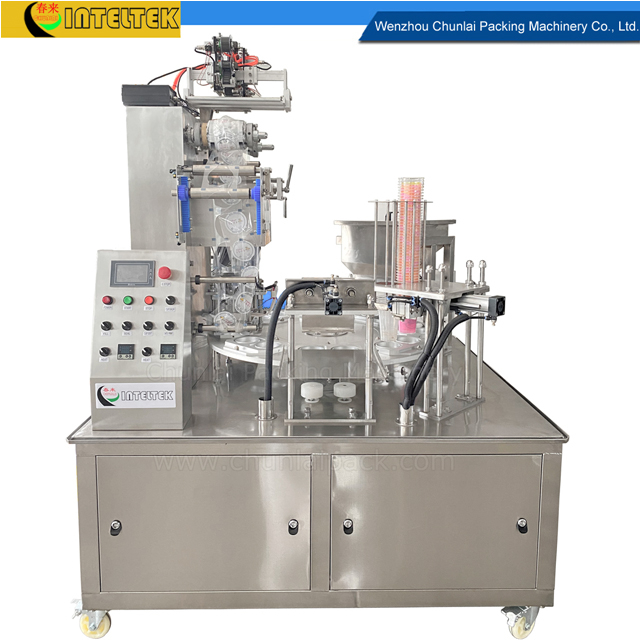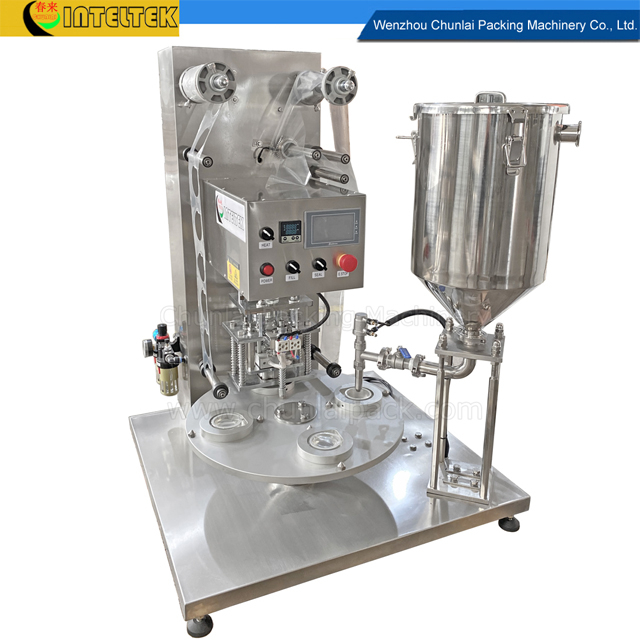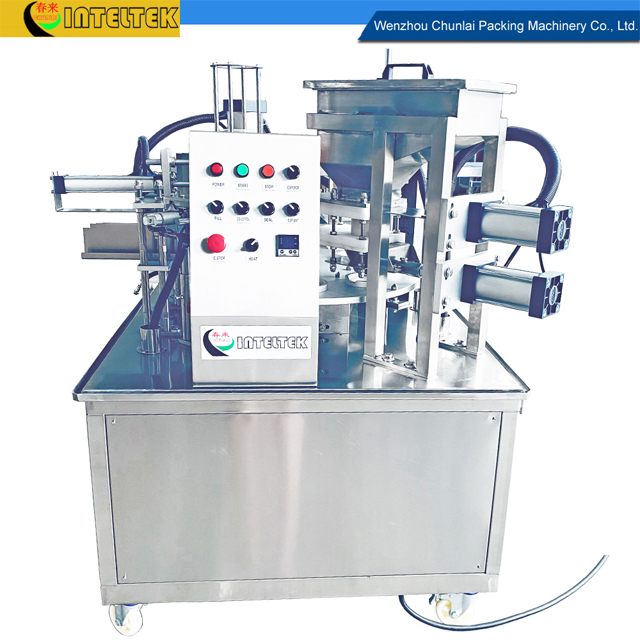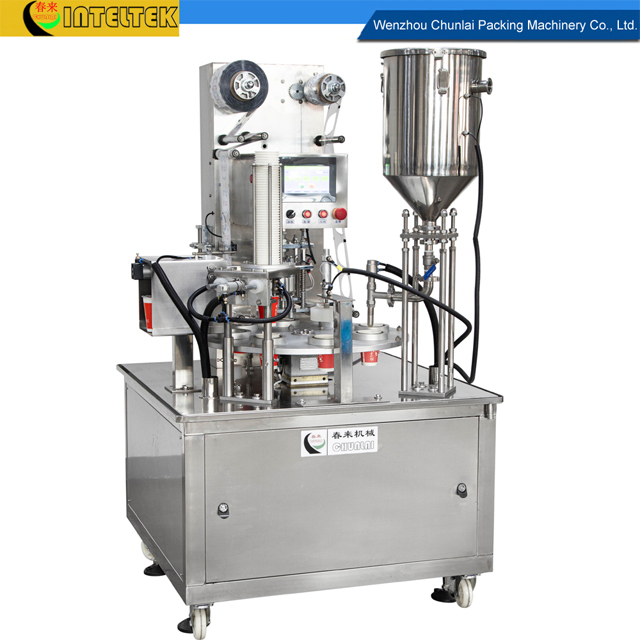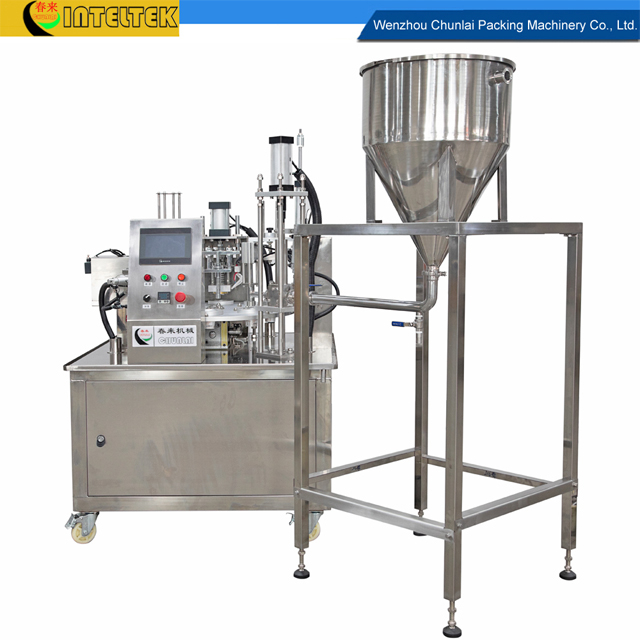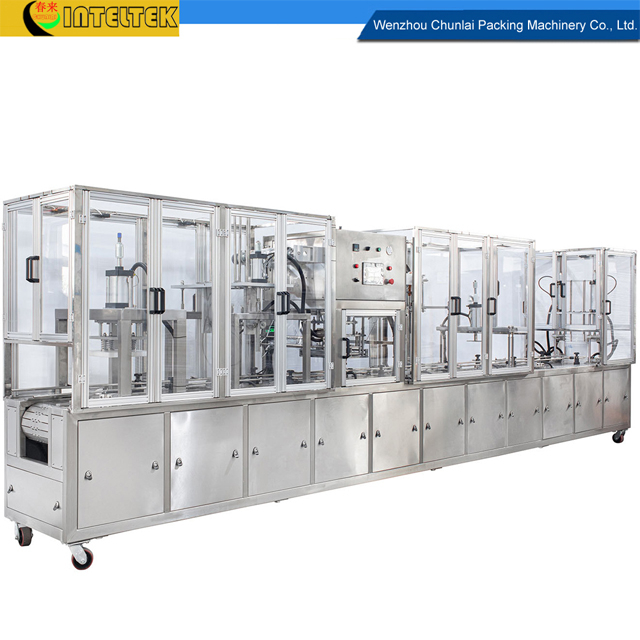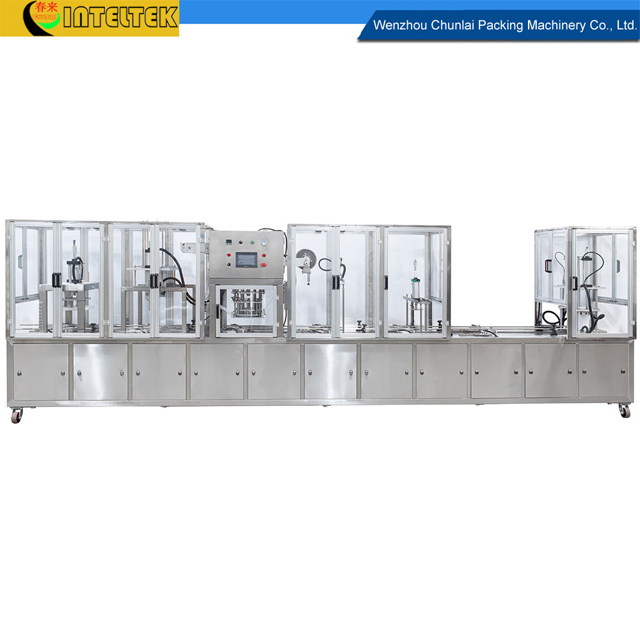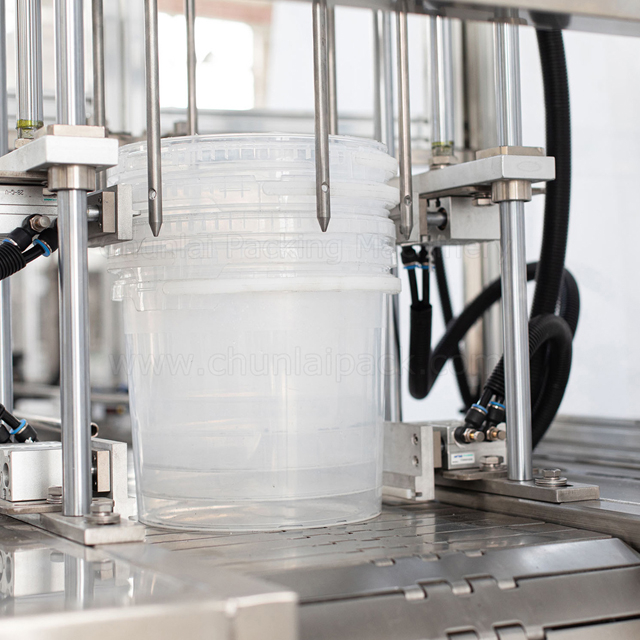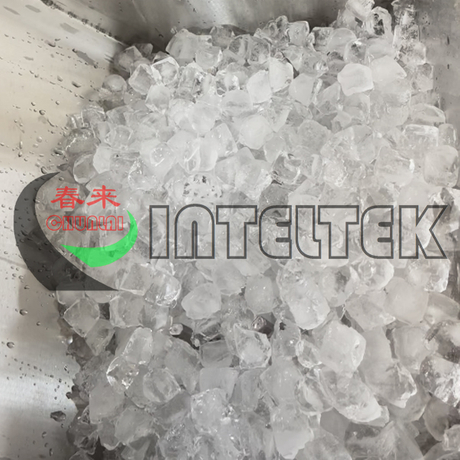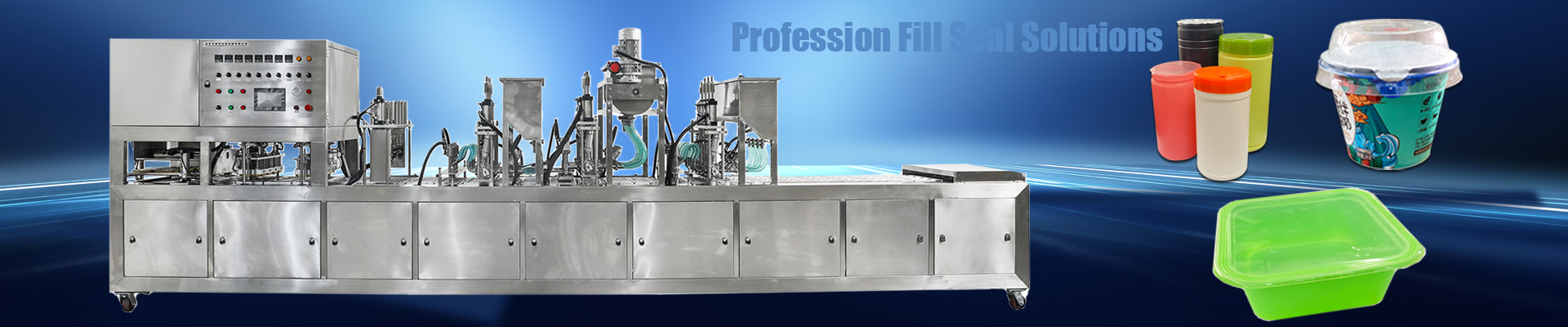


Ice Cubes Cup Filling & Sealing Machine is a packaging machine designed to automatically fill pre-formed cups with ice cubes (or crushed ice) and then seal the cup with a film or foil lid — producing hygienic, ready-to-sell ice cups for drinks, retail, catering, or convenience stores.
Below is a complete, practical guide to how it works, key features, configuration options, and how to choose the right one for your production.
What It Does
This machine automatically:
Denests empty cups
Fills ice cubes into cups
Applies and heat-seals a protective lid (film/foil)
Prints production data (date/batch)
Discharges sealed ice cups to the outfeed conveyor
It eliminates manual labor and ensures consistent portioning, hygiene, and packaging quality.
How the Machine Works – Step by Step
1) Cup Loading / Denesting
Empty PP/PET/PS cups are loaded into the machine’s hopper.
A denester places cups one by one onto the conveyor or rotary table.
2) Ice Feeding / Dosing
Ice cubes (or crushed ice) are delivered from an insulated ice hopper or ice conveyor.
Filling methods:
Volumetric cup filler (simple) — gravity or timed gate, based on cup volume.
Multi-head weigher — high accuracy (e.g., 200g per cup).
Ice size:
Whole cubes (e.g., 20–40 mm),
Half or crushed ice (for better packing density).
3) Film / Foil Lid /Plastic Lid Placement
A pre-cut film or foil lid/plastic lid is automatically transferred and placed on top of each filled cup.
Can use printed film for branding.
4) Heat Sealing
Temperature-controlled sealing bars seal the film/foil to the cup rim.
Parameters (temp/pressure/time) are adjustable for a tight, leak-proof seal.
5) Coding & Printing
An inkjet or laser coder prints date, batch, and other required info.
6) Outfeed / Discharge
Sealed ice cups are moved to the conveyor for packing into cartons or trays.
Key Features to Look For
✔ Hygienic Design
SUS304/316 stainless steel
Washdown-friendly
Enclosed ice feed to minimize melt and contamination
✔ Adjustable Fill
Recipe control for different cup sizes
Volume control (grams/cup)
✔ Automatic Film Feeding
Film reel with automatic feed & cut
Tension control for consistent sealing
✔ PLC + Touchscreen Control
Program recipes by cup size
Alarm & fault display
✔ Safety
Interlocked guards
Emergency stops
✔ Optional Upgrades
Multi-head weigher (for precise weight)
20–60 cups/min versions depending on lanes
Rotary table for higher throughput
Ice crushing system built in
Automatic lid feeder
Conveyor to cartoner
Typical Performance (Indicative)
| Machine Type | Speed | Notes |
|---|---|---|
| Single-lane linear | 800–1000 cups/hr | Small shops, market testing, low volume |
| 2-lane inline | 1200–1,800 cups/hr | Medium production |
4-lane inline can be customized more lanes | 3,000–3,600 cups/hr | Higher throughput |
(Speeds depend on cup size, ice size, and machine model.)
Common Cup Specifications
Cup diameter: 60–120 mm
Cup height: 70–150 mm
Cup material: PP / PET / PS / PLA
Cup volume: 200 ml – 500 ml (typical)
Handling Ice Melt & Hygiene
Since ice melts:
Use insulated hoppers and chutes
Minimize open air exposure
Add drip trays / collection pans
Drain water away from product zone
Typical Line Configuration
Ice maker → Ice buffer / hopper → Ice conveyor → Cup denester → Ice filling station → Film/foil sealing head → Coding station → Outfeed conveyor → Cartoner / palletizer
Choosing the Right Model
Tell me:
Cup size(s) (diameter & height)
Ice type (whole, half, crushed)
Target speed (cups/hour)
Sealing type (film or pre-cut foil)
Available space & utilities (power/air)
I’ll provide:
A specific machine model recommendation
Technical specs
Footprint/laydown drawing
Estimated price range
If you want, I can also prepare a quotation-ready specification sheet you can send to suppliers. Just share the details above.